Venora Match vs Daxtra
A Daxtra alternative that explains the match instead of extracting the fields
Extraction tells you what is on the CV. Matching tells you what it means for this role — and why.
What Daxtra is good at
Daxtra is a mature extraction and search layer with deep roots in the agency world, and it slots into recruitment systems that have been running for years. If your problem is getting data out of CVs and into an existing database, that is exactly what it was built for.
Two different problems
| Criterion | Venora Match | Daxtra |
|---|---|---|
| Primary job | Score and explain the fit against a specific vacancy | Extract, index and search CV data |
| Output per candidate | Fit score, reasons for and against, evidence table, draft interview questions | Structured fields and search relevance |
| Search | Plain-language semantic search, answered with reasoning | Boolean and semantic search over indexed fields |
| Interview stage | Drafted questions and structured panel feedback | Out of scope |
| Decision record | Score, rationale, who confirmed it and when | Whatever the host system records |
| Model transparency | Models named publicly: gpt-oss-20b, gpt-oss-120b | Not published |
The Daxtra column describes what that product is built and sold to do. Capabilities change; check the current documentation before you decide.
The gap between "has Java" and "can do this job"
Field extraction is literal. It finds the word on the page. A candidate who ran the same system under a different name, or who describes six years of the work without ever using your noun for it, is invisible to a keyword. Matching against the requirements of the vacancy — what the role needs, essential apart from preferred — is a different operation, and it is the one that changes who ends up on the shortlist.
Screening is only half of it
The shortlist is where extraction tools stop and the work starts again: writing interview questions, running a panel, collecting feedback that three people recorded three different ways. Venora Match carries the analysis forward — questions drafted from the gaps it found, feedback captured against the same criteria by every interviewer, through to the final decision.
Naming the models is part of the answer
We publish which models read the CVs — gpt-oss-20b, gpt-oss-120b, whisper-large-v3, whisper-large-v3-turbo — and where they run. They are open-weight models on OVHcloud's AI Endpoints in France, which means your data reaches OVHcloud and nobody else. A buyer's DPO can check that claim rather than accept it.
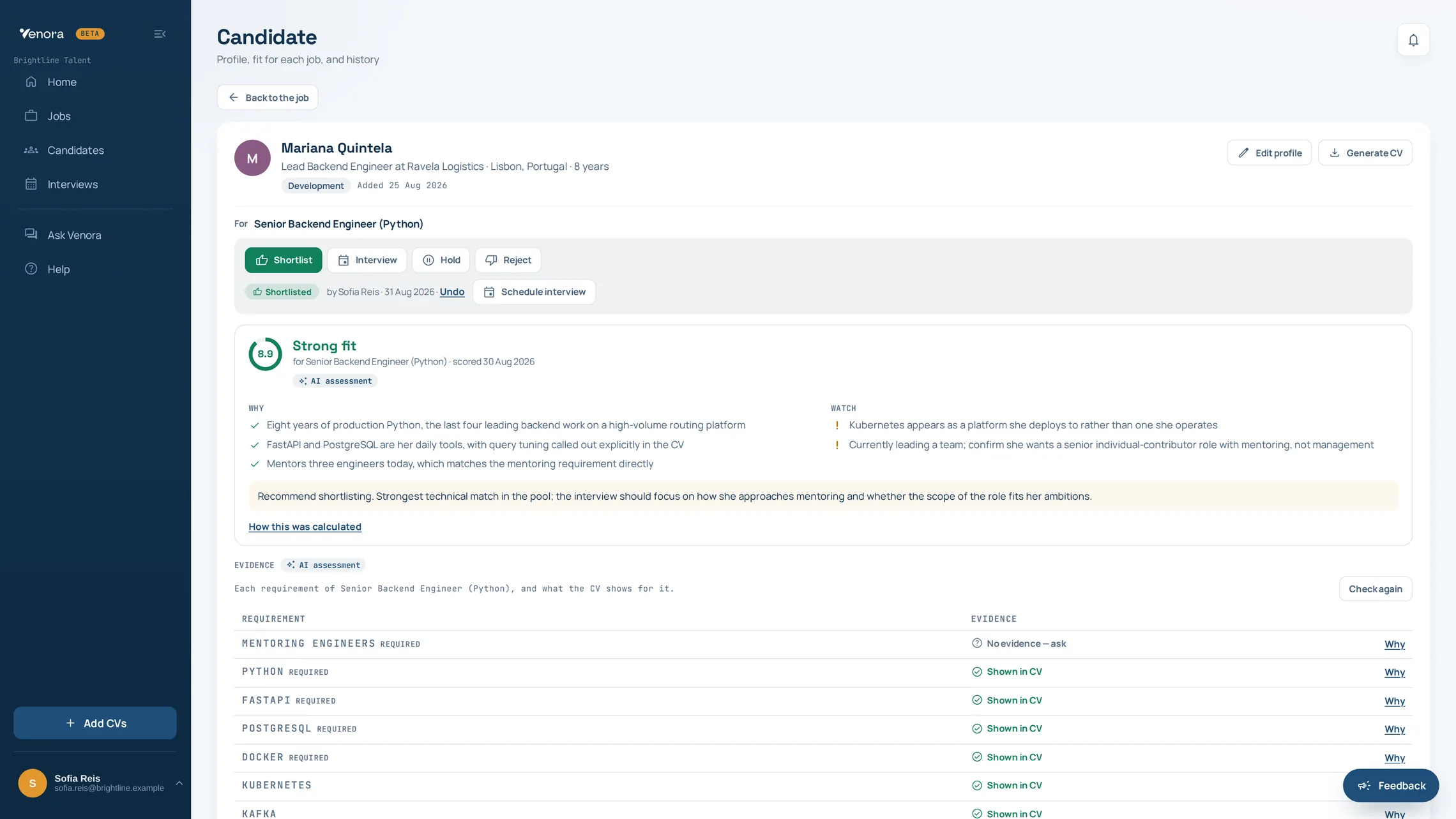
Keep Daxtra for what it does well if it is already embedded. When you need the shortlist explained rather than the fields extracted, book a demo on a real vacancy.
More detail: what Venora Match does, how it works, where your data lives, or the other comparisons.
See it on one of your own vacancies
Twenty-five minutes. Bring a real role and the applications you have for it — you leave with the ranked shortlist and the reasoning behind it, whether or not you take it further.